
Job Overview
Location: Courtice, Ontario
Structure: Two-story detached residential home with attached front garage
Problem: Ongoing mouse activity reported inside the home
Service: Interior and exterior mouse treatment
Visits: Four visits
Summary
We completed a multi-visit mouse control service at a residential property in Courtice after the owner reported long-term mouse activity throughout the home. Our team focused on interior and exterior baiting to reduce activity and stabilize the infestation. Exclusion work was discussed but not approved. Follow-up visits were completed to rebait as activity fluctuated, with a final preventative service conducted one year later.
Background / Property Context
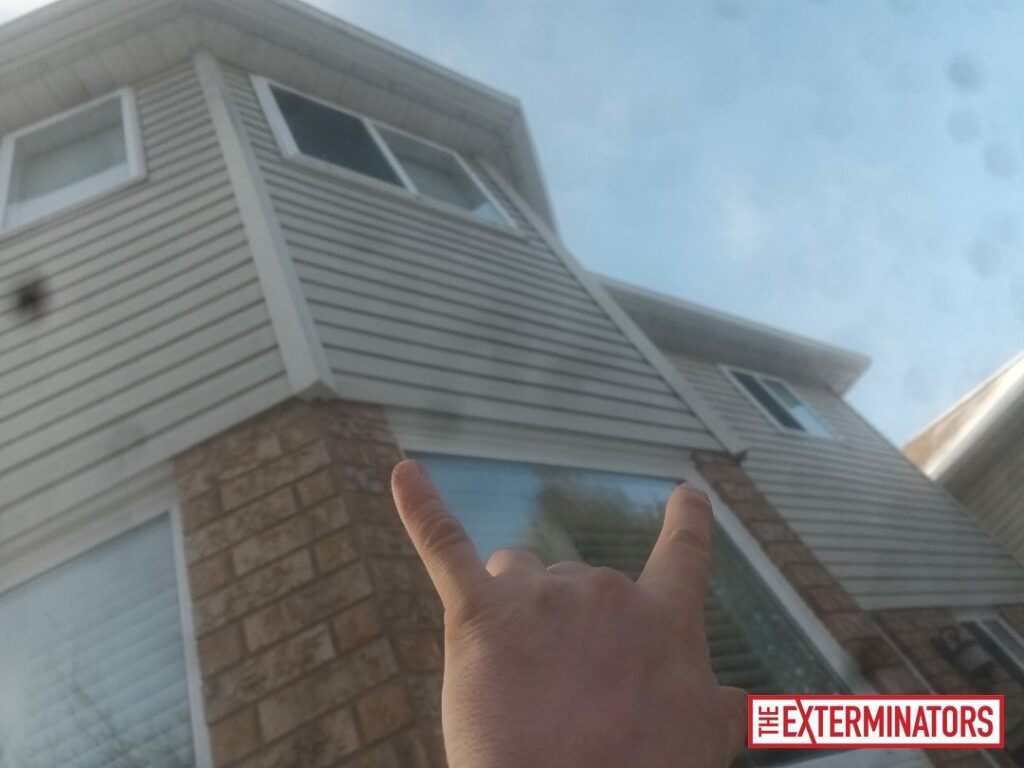
The property is a two-story, detached brick home with vinyl siding and soffit transitions typical of homes in the area. The structure includes an attached garage and multiple roofline and siding junctions that can be vulnerable to rodent entry if not sealed.
Customer Concern
Tenants reported ongoing mouse activity inside the house, primarily in the kitchen and basement areas. The issue had reportedly been present for several years, prompting the request for professional pest control services.
Inspection & Findings
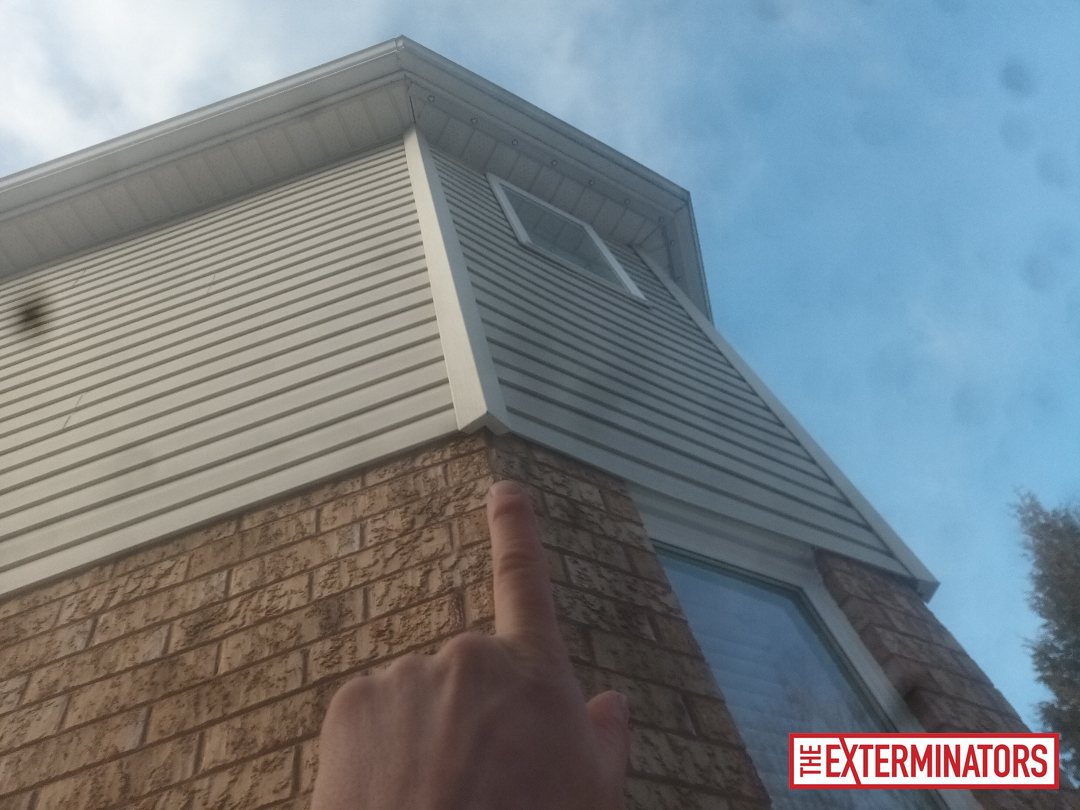
During the initial inspection, signs of mouse activity were consistent with an established interior presence. Activity was concentrated in areas with food access and lower-level spaces. Exterior inspection identified potential structural gaps along soffit and siding transitions that could allow rodent entry, though no physical exclusion work was authorized.
Cause Analysis
Mouse activity was likely sustained by a combination of long-term access points and favourable interior conditions such as warmth and food sources. Gaps at soffit and siding intersections are common entry mechanisms on homes of this style. Without structural exclusion, mice were able to continue accessing the building envelope intermittently.
Treatment / Removal
All pest control work was carried out by a licensed exterminator in accordance with Ontario Ministry of the Environment guidelines.
Visit 1:
Grant installed tamper-resistant bait stations in all identified high-activity interior areas. Commercial-grade rodenticide was used within secured stations to reduce the existing mouse population. Large, tamper-resistant exterior bait stations were also installed around the perimeter. Exclusion of soffit gaps was recommended but declined at that time.
Visit 2:
Following reports of renewed interior activity, interior bait stations were rebaited. This addressed the immediate increase in mouse presence inside the home.
Visit 3:
Subsequent exterior activity prompted a service visit to rebait the exterior stations to maintain population control around the structure.
Visit 4:
Approximately one year later, Grant returned to complete a preventative mouse treatment. All existing stations were rebaited. No active mouse issues were reported following this visit.
Exclusion & Repairs
No exclusion or sealing work was performed, as the customer chose not to proceed with recommended soffit gap sealing. Potential entry points were documented during inspection only.
Outcome & Confirmation
Interior mouse activity was controlled through repeated baiting visits. Following the preventative treatment completed during the final visit, no further service requests for mouse activity were received. Ongoing monitoring through bait stations remained in place.
Technician Notes
- Interior and exterior tamper-resistant bait stations were used throughout the service period.
- Activity levels fluctuated over time, requiring scheduled rebaiting.
- Photos provided show upper wall and soffit areas where potential gaps may be present at siding and roofline intersections.
- No structural repairs or exclusion were completed as part of this job.
Contact us at 905-581-3789 if you have any rodent or pest issues in Oshawa or surrounding areas