
Job Overview
Location: Oshawa, Ontario
Structure: Detached two-storey house with partial brick exterior and white siding
Problem: Mouse activity reported indoors, including droppings in kitchen and basement areas
Service: Mouse treatment
Visits: 4
Summary
We were contacted by a landlord after tenants reported ongoing mouse activity inside a detached residential property in Oshawa. Activity was initially observed in the kitchen and later confirmed in additional interior areas, including the basement. A multi-visit mouse treatment program was completed over time, with monitoring, rebaiting, and entry point identification.
Background / Property Context
The property is a detached two-storey house with brick along the lower exterior and sections of the first and second floors, with white siding on remaining elevations. The structure includes multiple utility penetrations, window and door frames, and siding transitions that can present access opportunities for rodents if not fully sealed.
Customer Concern
The landlord reported that tenants were seeing mice inside the home, with droppings noted in the kitchen and signs of activity extending into basement areas. The concern was focused on eliminating interior mouse activity and monitoring for recurrence.
Inspection & Findings
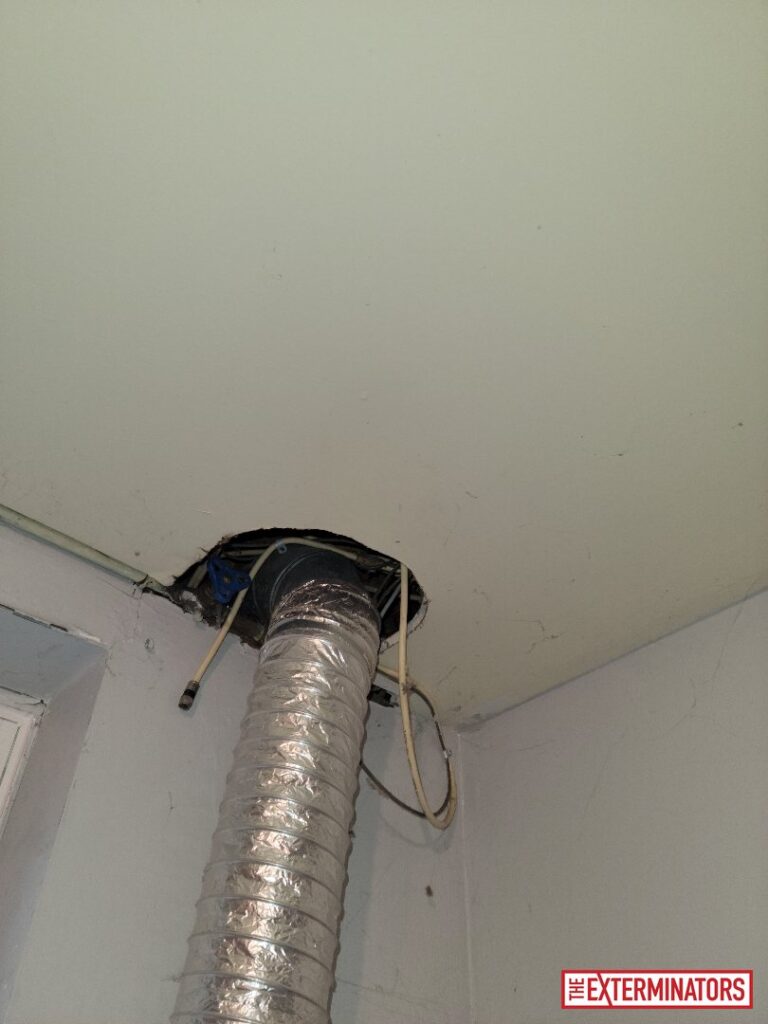
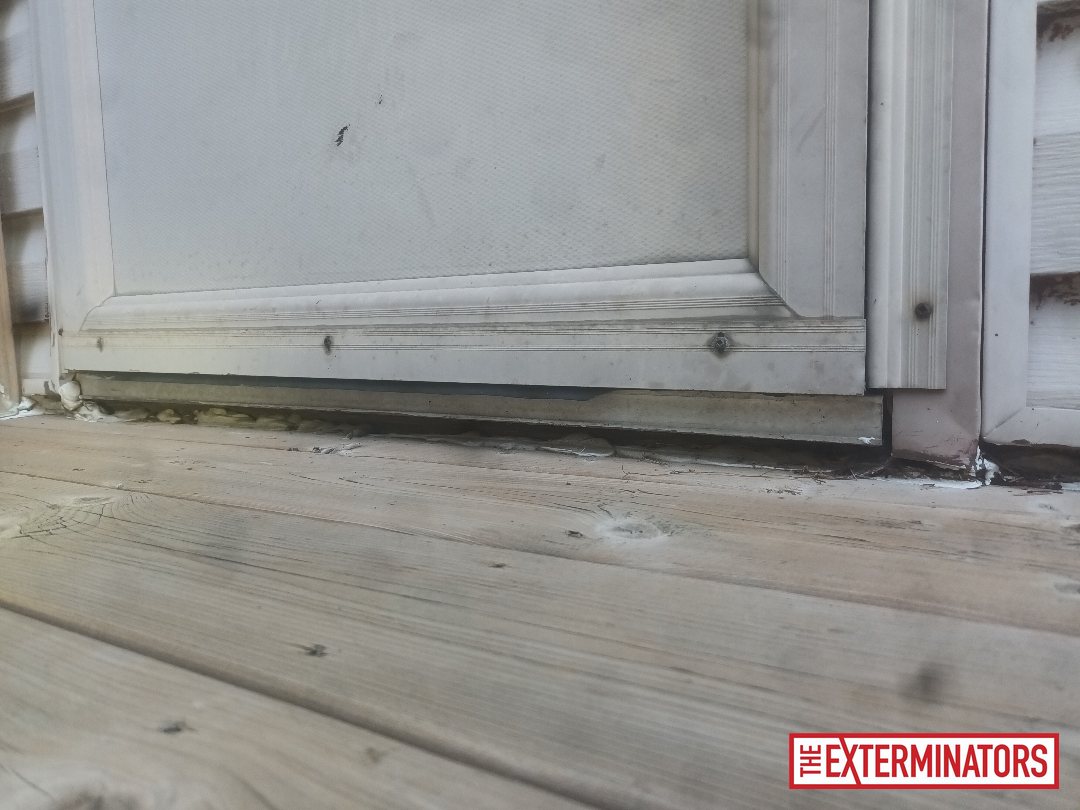
During the initial inspection, signs of mouse activity were confirmed in interior areas with food access and lower-level utility spaces. Subsequent inspections identified potential entry points, including gaps along siding transitions, cracks around windows and doors, soffit-to-wall junctions, and utility and vent penetrations.
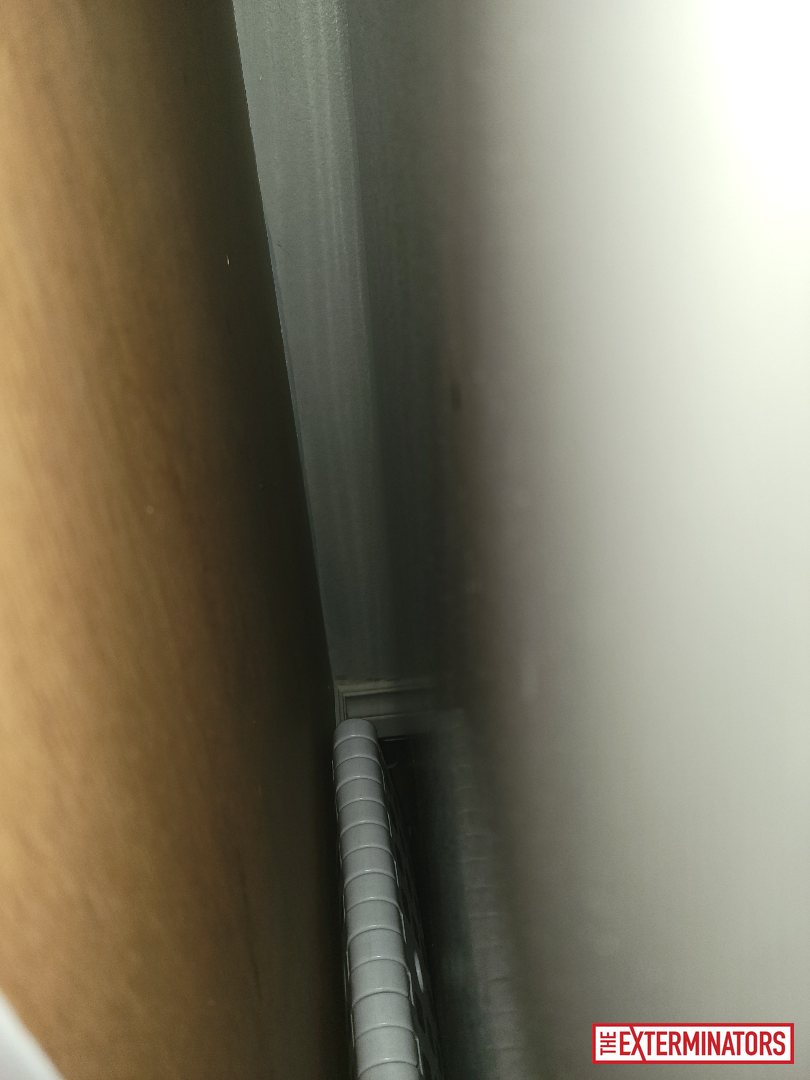
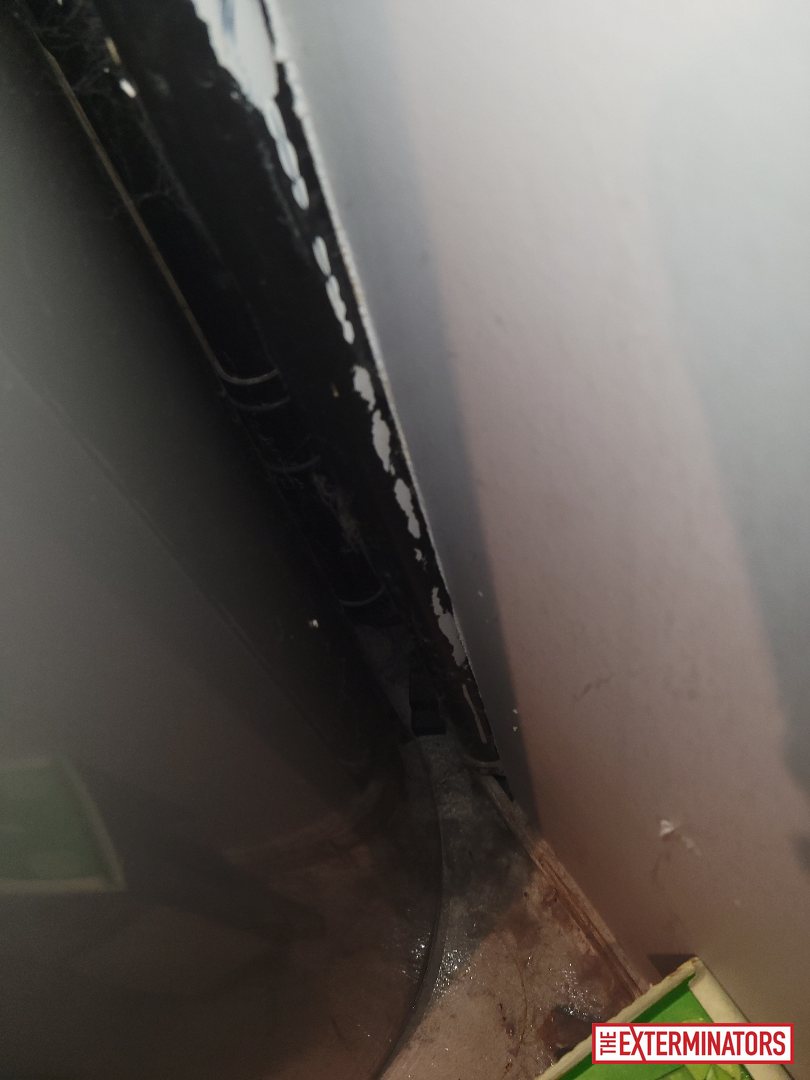
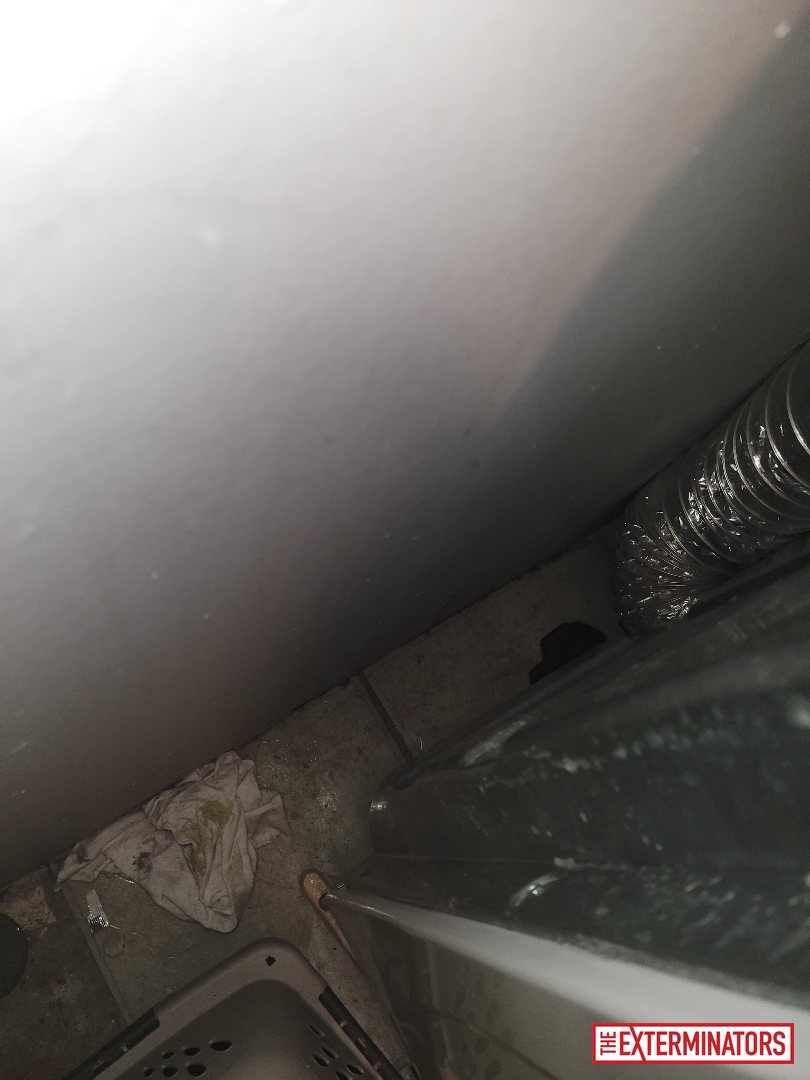
Photo documentation shows narrow wall cavities with ducting, plumbing penetrations passing through unfinished openings, and exterior gaps beneath door thresholds and siding sections that could allow rodent entry.
Cause Analysis
Mouse activity was likely supported by accessible interior food sources combined with exterior entry points created by small structural gaps. Utility penetrations, siding transitions, and door and window framing can allow mice to enter when exclusion work is deferred. Once inside, mice tend to nest in concealed wall and basement areas and travel along mechanical runs.
Treatment
All pest control work was performed by a licensed exterminator in accordance with Ontario Ministry of the Environment guidelines.
On the first visit, our technician Grant placed tamper-resistant bait stations in areas of confirmed activity throughout the interior. Stations were loaded with commercial-grade rodenticide designed for repeated feeding. The customer was provided with a quote to seal an exterior siding gap, but exclusion work was not approved at that time.
On the second visit, interior bait stations were rebaited after tenants reported continued activity.
Approximately one year later, a third visit was completed to address renewed mouse activity. Existing stations were rebaited, and additional potential entry points were identified during inspection, including window and door cracks and soffit wall gaps. Exclusion options were again reviewed with the customer, but no sealing work proceeded.
During the fourth visit, bait stations were rebaited once more. Feeding levels were low at this stage, indicating reduced mouse activity.
Exclusion & Repairs
No exclusion or structural sealing work was completed as part of this service. Potential entry points were identified and documented for the customer, including siding gaps, door and window framing gaps, soffit transitions, and utility penetrations.
Outcome & Confirmation
Following the final rebaiting visit, bait station activity was minimal, indicating that the mouse issue had been brought under control. No further escalation of activity was reported at the time of service completion.
Technician Notes
Grant completed all inspections, bait placements, and rebaiting visits. Interior station placement focused on kitchens, basements, and utility-adjacent areas. Monitoring over multiple visits showed a gradual reduction in feeding activity, consistent with successful population control despite the absence of exclusion work.
Contact us at if you have any rodent or pest issues in Oshawa or surrounding areas